Google+ The Daily Jewel

Pages

Friday, December 7, 2012

Dec. 10th - Christie's Magnificent Jewels


CHRISTIE’S TO PRESENT AN EXPANDED PRE-HOLIDAY SALE OF OVER 300 LOTS,
LED BY A STUNNING 50-CARAT D-COLOR DIAMOND RING BY GRAFF
ESTIMATED AT US$7-10 MILLION

IMPORTANT DIAMONDS, FINE COLORED GEMSTONES, NATURAL PEARL
S,VINTAGE JEWELS & SCORES OF HOLIDAY GIFTS READY FOR BIDDING
New York - An exceedingly rare red diamond, a stunning three-stone emerald ring, and a 50-carat D color diamond ring by the celebrated jeweler Graff are among the star lots of Christie’s upcoming Magnificent Jewels sale on Monday, December 10.  With over 300 lots, this blockbuster sale offers the perfect solution to the age-old question of what to buy a loved one for the holidays.  Large colored and colorless diamonds, rare gemstones, natural pearls and exquisite signed jewels from the Art Nouveau and Art Deco periods will be featured in the day-long auction at Christie’s in Rockefeller Center, with estimates ranging from $500 up to several million dollars. The total sale, which is accessible for bidding in person, on the phone, online, or by absentee bid, is expected to realize in excess of $25 million.
“Since the start of 2012, this has proven to be a vibrant year of strong prices for top-quality diamonds, colored gemstones, natural pearls, and signed jewels at auction. Christie’s New York is pleased to present this expanded selection of fine jewelry that truly offers something for every client, whether your thoughts are on finding a special gift for the holidays, or acquiring a great investment-quality diamond for the long-term,” noted Rahul Kadakia, head of Jewelry for Christie’s Americas and Switzerland.
Per-carat prices for exceptional diamonds have continued to climb this auction season, spurred by collector demand for investment-quality gems.  At Christie’s recent jewelry auction in Geneva, the historic 76.02 carat, D-color Archduke Joseph Diamond fetched US$21.5 million, setting a new world auction record for a colourless diamond. It also set a new record per-carat price for a colorless diamond at $282,545 per carat, surpassing the landmark $266,000 per carat price achieved for the 33.19 carat, D-color Elizabeth Taylor Diamond, sold at Christie’s New York in December 2011.
In response to the deep appetite among collectors for diamonds of this caliber, Christie’s has assembled a superb selection of top-quality colored and colorless diamonds for this pre-holiday sale, led by a dazzling array of twelve D-color diamonds –  the whitest shade possible. The star of the group is a stunning rectangular-cut, D-color, potentially internally flawless diamond ring of 50.01 carats (pictured at left and page one, center).  Offered for sale from an important private collection, the stone is mounted in a platinum setting designed by the celebrated jeweler Graff, with two baguette-cut diamonds flanking the center stone.  This spectacular ring is estimated at $7,000,000 – 10,000,000.
A RARE REDDISH-ORANGE DIAMOND
For collectors of colored diamonds, perhaps no shade of diamond is as alluring – and elusive – as the rare red diamond. This season, Christie’s is proud to present a 3.15 carat circular-cut fancy reddish orange diamond  – the largest reddish orange diamond ever graded at the Gemological Institute of America (GIA), and the largest ever to be offered at auction.  Exhibiting excellent symmetry and polish, this special stone is estimated at $700,000-$1,200,000 (pictured at right and on page one).
The diamond’s exceptional rarity is a function of both its intense color and large size; highly saturated diamonds in shades of red and orange are considered to be among the rarest of all fancy colored diamonds. The cause of their coloration is a natural phenomenon that is not thoroughly understood, but is believed to occur when minute quantities of nitrogen or hydrogen are present when the diamond’s crystal lattice is forming deep within the earth’s crust.
Very few red diamonds larger than one carat are known to exist. Among the largest is a circular-cut 5.03 fancy dark red diamond that is now in the permanent collection of the Smithsonian Institution in Washington, D.C. The appearance of this rare diamond at auction presents a unique collecting opportunity for gem connoisseurs who appreciate both the aesthetic appeal and serendipitous nature of this true geological wonder.
TOP JEWELS AND HOLIDAY GIFTS
In addition to top colored and colorless diamonds, the Magnificent Jewels sale features an outstanding selection of rare gemstones as well as signed jewels from coveted design firms such as Buccellati, Cartier, David Webb, Tiffany & Co., Van Cleef & Arpels, and Verdura, among others.  Among the star lots is an impressive three-stone Colombian emerald ring mounted with an 8.51 carat cushion-cut center stone and flanked by matching emeralds of 4.04 and 3.94 carats, respectively (estimate: $475,000-550,000; pictured page one, right).
For devotees of fine period jewels, the sale features an impressive group of signed creations from the Art Nouveau, Belle Époque and Art Deco periods, including original designs by Réné Lalique, Cartier, and the late American jeweler Paul Flato, known as the original Hollywood celebrity jeweler.  A spectacular sapphire and diamond bracelet by Paul Flato from circa 1935 graces the cover of the sale catalogue (pictured previous page; estimate: $120,000-180,000). Designed as an openwork bracelet with alternating rectangular-cut sapphire and diamond bricklink bands, this stunning jewel is offered from a prominent private collection.
The complete e-catalogue for Magnificent Jewels is now online at:

AUCTION:  Monday, December 10, Christie’s Rockefeller Center (2 sessions): 10am & 2:30pm
PUBLIC PREVIEW: Friday, December 7 through Sunday, December 9: 10am-6pm daily

Wednesday, December 5, 2012

DeNatale Jewelers in the Historic Trinity Building


DeNatale Jewelers Unveils Its New Space in the Historic Trinity Building


On November 28th, 104 year old DeNatale Jewelers, a beloved jewelry institution in the Financial District, celebrated its grand re-opening in the historic Trinity building at 111 Broadway.  Guests marveled at the beautiful new space adorned with vaulted ceilings, ornate molding and stained glass windows in one of the city’s grandest buildings.  Since 1908, generations of the DeNatale family have maintained a reputation as a trusted jeweler, offering designer, custom and one of a kind jewelry.

Esteemed clients and friends mingled with jewelry designers from Armadani, Demarco, Lazare Kaplan and Gumuchian who displayed their stunning jewels.  Huge stained glass windows showcase the green and peaceful Trinity courtyard while providing abundant sunlight to make the gems glisten.  Among the attendees was former Governor Paterson as well as downtown officials. Guests were thrilled to see this thriving downtown establishment at home in an appropriately elegant setting. Ten percent of all sales from the evening were donated to the 9/11 Memorial fund.

“We are so pleased to have settled into such a beautiful, special place that is not just a part of New York’s history – but our family’s as well. We felt like it was fate to find such a perfect space in the neighborhood that we have called home for so long. It was wonderful to open our doors to our loyal clients and friends to celebrate our new location and our continued legacy,” expresses co-owner Jim DeNatale.

In this new location, customers will be able to experience the continued tradition set by the DeNatale third generation family led today by brothers Robert, John and Jim who are devoted to assisting their clients. DeNatale Jewelers prides itself on combining the latest fine jewelry style with good, old-fashioned values. Garnering top reviews from its patrons, coupled with an exquisite new space, DeNatale Jewelers is well positioned for continued growth and excellence for years to come.

An Historic Imperial Russian Jewel from the Collection of Mrs. Charles Wrightsman


Gorgeous Brooch in today's Sotheby's Auction...

Tuesday, December 4, 2012

GIA Opens Gem Laboratory in Japan


GIA Opens Gem Laboratory in Japan
Industry-leading diamond grading services to serve public, industry

CARLSBAD, Calif. – Dec. 3, 2012 – GIA (Gemological Institute of America) is now offering diamond grading services in Tokyo.  The Institute’s ninth global laboratory brings industry-leading diamond grading to Japan, one of the world’s largest markets for gems and jewelry. The new lab will accept diamonds for grading directly from clients beginning today, Dec. 3, 2012.

The GIA laboratory in Tokyo lab will initially offer Diamond Dossier® and Diamond Grading Report services for D to Z diamonds up to 2.99 cts. The Tokyo lab will also take in colored stones and pearls for any other GIA services. At this time, those gems will be sent to another GIA global laboratory lab and returned to Tokyo for pick-up. GIA plans to expand the menu of services offered by its Tokyo facility in the coming months.

“Bringing GIA’s diamond grading standards and research-backed lab services to such an important market will serve the public interest by supporting the Japanese gem and jewelry industry,” said Tom Moses, GIA senior vice president for laboratory and research.  “Our global network of laboratories enables GIA to remain at the forefront of gemological developments and provide the best possible service to our laboratory clients.”

GIA’s intention to open a gem grading laboratory in Japan was announced in December, 2011, following extensive consultations with Japanese stakeholders. The facility in Tokyo is GIA’s ninth global laboratory and the seventh outside of the United States. GIA has offered educational programs in Japan since the 1970s and there are nearly 4,000 holders of the Graduate Gemologist diploma, the most advance certification offered by the Institute, in Japan.

“Providing grading services to the gem and jewelry sector where they operate central to GIA’s practice,” said Mari Okada, manager of the GIA laboratory in Tokyo. “We are excited to open a laboratory in Tokyo to complement GIA’s long-standing educational presence in Japan.”

All gemstones submitted to GIA anywhere in the world may be sent to any GIA laboratory, ensuring the equal, unbiased and neutral examination based on the rigorous and consistent standards that characterize all of GIA’s gem identification and grading services. 

Those interested in using GIA laboratory services in Japan should call +81-3-5812-3215 or fax +81-3-3836-3280.

About GIA
An independent nonprofit organization, GIA (Gemological Institute of America), established in 1931, is recognized as the world’s foremost authority in gemology. GIA invented the famous 4Cs of Color, Cut, Clarity and Carat Weight in the early 1950s and in 1953, created the International Diamond Grading System™ which, today, is recognized by virtually every professional jeweler in the world.

Through research, education, gemological laboratory services, and instrument development, the Institute is dedicated to ensuring the public trust in gems and jewelry by upholding the highest standards of integrity, academics, science, and professionalism. Visit www.gia.edu. 

Monday, December 3, 2012

From Slavery Comes Creative and Physical Freedom - Made By Survivors


Made By Survivors is a not-for-profit dedicated to the economic empowerment of women worldwide, addressing global poverty and marginalization of women. 

This information is a Guest Post by Dianna Badalament, Jewelry Program Manager at Made By Survivors.

Established in 2005, Made By Survivors empowers women who have survived human rights abuses including: human trafficking, slavery, rape, child marriage and extreme poverty, coupled with limited education. 

We train and employ survivors in a highly technical craft: Jewelry Arts. 

We also create opportunities for survivors to learn business and entrepreneurship so they can have long-term financial stability and transform their communities from within. 


In 2009, the United Nations Inter-Agency Project on Human Trafficking’s Siren Report indicated reasons why economic empowerment should be a priority in aiding a human trafficking survivor:
· It is what survivors often say they want and need
· Involvement in economic activities requires participation in a wider community    
  contributing to social reintegration
· It can reduce stigmas and also be socially empowering
· It reduces the risk of further exploitation

There is an array of inspiring news about Made By Survivors that I’d like to brief you about: 

· Made By Survivors’ unique sterling silver jewelry - affordable, quality, handmade, fair trade jewelry

· Made By Survivor stories of perseverance and hope from our artisans: Baby and Soma

· Founder’s story, a family radically changes their lives and works together to make an impact


· Why Made By Survivors is different from other non-profits:
> 100% of profits go to support rescue, shelter building, education and employment.
> MBS centers are designed so they can be independent, self-sustaining, and survivor-owned within three years of launch.
> Our survivor-metalsmiths are breaking gender barriers. Metalsmithing is traditionally a male-only profession in many parts of the world.

Inline image 1The transformation in the survivors as they move through our programs is one of dramatic improvement financially, emotionally, and socially.  The products they create are of great pride to the artisan-survivors and the best way to support them is to buy their quality, fair trade, handmade products atwww.MadeBySurvivors.com and wear them or gift them.  Through MBS’s website, donors can also sponsor children for school or donate to support our many programs.    

Made By Survivors Products can be purchased at: http://www.madebysurvivors.com/

Friday, November 30, 2012

WDC Speech to the 2012 Kimberley Process Plenary Meeting


WASHINGTON, D.C.: NOVEMBER 27, 2012 - Over the past 10 years, the Kimberley Process has proven the effectiveness of international cooperation, said Eli Izhakoff, President of the World Diamond Council, in  his address today to the KP Plenary Meeting taking place in Washington, D.C. But to continue to be able to do so, the organization needs to be able to deliver on what it promises, he said, adding that to be effective all countries need to be equally committed to the process and the decisions that are taken within the forum.

The following is the full text of Mr. Izhakoff's speech to the 2012 Kimberley Process Plenary Meeting:

Ladies and gentlemen,

It is my honor to be addressing you today, and a privilege once again to visit this great city, which to so many people, both in America and around the world, symbolizes the principles of both national and personal freedom, and the realization of a people's right to self-government and self-fulfillment.

The United States was born when a group of citizens released themselves from the yoke of colonialism, and became the model for what free men can achieve when they are allowed to take control over their own destiny. That sense of personal empowerment in a country rich in natural resources led to the growth of the world's largest economy and most powerful democracy. 

In January 1961, then President-Elect John F. Kennedy spoke about the "city on the hill," saying that "the eyes of all people are upon us." And so it has been for generations that people from around the world have looked to what has been achieved in this country, and said to themselves "we can do the same at home."

It was to empower ordinary people in the rough diamond-producing countries of Africa to achieve what was done here in America that the Kimberley Process was created. The KP's primary objective was never to restrict business, but rather to enhance the trade in legitimately mined goods. By eliminating the threat posed by conflict diamonds in the pipeline, KP-compliant countries would be able to take full advantage of their diamond resources, and invest in the programs necessary to create economic growth and social development.

And, as a country that undisputedly is the most shining example of a nation that relied on its physical and human assets to achieve economic independence and prosperity, it was fitting that the United States be selected to lead the Kimberley Process.

It is at this juncture I would like to recognize our host, the U.S. State Department, and in particular several of its officers with whom I have been privileged to work, starting with Ambassador Gillian Milovanovic, the Chair of the Kimberley Process.

I do not believe that I would be overstating the fact when I say that she took on a massively complicated and sensitive task when she was appointed KP Chair. The issues on table were challenges enough, but additionally so was the fact that she was the first American to be holding the position. She also was first woman, which in itself is a notable milestone.

I also believe that I will not be overstating things when I say that she has done a tremendous job, and during the past 11 months in office has laid the foundations for what is more inclusive, more attentive and more effective organization.

The Assistant Secretary for Economic and Business Affairs, Jose Fernandez, has been a pillar of strength and a source of great assistance, using his experience, diplomatic acumen and the influence of his office to make the United States' year at helm of the Kimberley Process more effective. Mr. Assistant Secretary, we thank you for your efforts.

I will also like to pay tribute to the State Department official who I have known the longest and with whom I have spent the most face time, and that is Brad Brooks Rubin, whose official title is Special Advisor for Conflict Diamonds in the Bureau of Energy, Economic and Business Affairs at the United States Department of State. Brad has been part of the process for many years, and is as knowledgeable as anyone that I know about the issues at hand. He has played a critical role over the past year, and I trust will continue to do so into the future.

Just two weeks ago I attended, as did a good number of you present today, a diamond conference at Victoria Falls in Zimbabwe. It was a remarkable gathering that, just two years earlier, few would have predicted could have been possible. It brought together members of the Zimbabwe government and mining community, government and industry leaders from other African countries, the Chair of the Kimberley Process, members of the diplomatic corps in Zimbabwe including from the United States, members of the international diamond industry and trade, and human rights and civil society activists in Zimbabwe.

The presence of the NGOs at the conference was particularly important. Alongside government and industry, civil society has always served as the third pillar of the Kimberley Process, and without which it would not properly stand. Their attendance at that meeting, as well as at others in different parts of the world, contributes significantly to the credibility to the KP.  

The conference would never have taken place were it not for the agreement reached at the last Kimberley Process Plenary in Kinshasa, in November 2011, which enabled the start of exports from two KP-compliant mines in the Marange region of Zimbabwe, and detailed a mechanism that would allow for the addition of other mines in the future.

The agreement, which required the approval of all KP members, was arrived at after years of tough negotiations, and illustrated well the basic raison d'être of the Kimberley Process, and that is: through international cooperation, the integrity of the rough diamond chain of distribution can be protected, enabling producing countries and their citizens to gain fair benefit from their natural resources.

The U.S. Secretary of State, Hillary Rodham Clinton, has herself underlined the importance of international cooperation in providing solutions to the challenges facing our world, and particularly those confronting Africa. In a speech she that she delivered just this past August in Cape Town, South Africa, she said and I quote: "None of these problems can be solved by any one country acting alone or even by several countries acting together. Each one calls for a global network of partners - governments, businesses, international and regional organizations, academic institutions, civil society groups, even individuals all working in concert. And there cannot be a strong global network unless there are strong African partners."

Well the Kimberley Process offers all of that, including strong African partners. Over the past 10 years it has proven the effectiveness of international cooperation. But to continue to be able to do so, we need to be able to deliver on what we promise. For the KP to be effective, all countries need to be equally committed to the process and the decisions that are taken within the forum.

For the process to work effectively, the consumer needs to understand that every legitimately traded diamond can be traced to a verifiable KP certificate, by way of the World Diamond Council's Chain of Warranties. However, if we begin to differentiate between KP certificates, implying that one may be more legitimate that the other, then we will undermine consumer confidence in general. And if that happens, then the potential of the diamond to serve as an agent for economic and social progress will be damaged - across the board, in all the countries that diamonds are mined and processed.

The goal of ensuring an ethical chain of distribution needs to be fully inclusive, but it does not mean that, in formulating equitable international solutions, we automatically should conform to the lowest common denominator. If that was the case, many of us in this room would have been spared a good number of sleepless nights.

For our part, the World Diamond Council is strongly committed to improving and reforming the Kimberley Process, so that the KP is able to act with greater decisiveness, determination and continuity, and also to expanding the definition of conflict diamonds, so that it incorporates all the instances of armed conflict and armed violence that may be associated with the rough diamond business.

Indeed, when at our Annual Meeting in Vicenza, Italy, in May of this year, Ambassador Milovanovic's first suggested publicly that the definition of conflict diamonds be expanded to include "rough diamonds used to finance, or otherwise are directly related to armed conflict or other situations of violence," we immediately passed a resolution that stated that this was a proposal that would advance the discussion in the KP.  

We also agree with the qualification that Ambassador Milovanovic provided during her speech to the diamond conference two weeks ago in Zimbabwe, in which she stated that "additional certification standards beyond the current definition should apply only to armed conflict and/or armed violence that is demonstrably related to rough diamonds and independently verified."  As she said, they should not be applicable to "isolated, individual incidents, or to circumstances or situations in which an armed conflict exists but is unrelated to the diamond sector."

The Kimberley Process Ad Hoc Committee on Enforcement, which will deal with issues relating to the enforcement of the Kimberley Process Certification Scheme, is a body whose formation we also strongly support. We believe that it, too, demonstrates the firm commitment of this organization to pursue its objectives, which is to render the diamond pipeline, from mine to market, free of conflict diamonds.

The World Diamond Council is, of course, not a voting member of this body, but rather an observer. However, as one of the primary beneficiaries of the indispensable work done by the KP, we are a most dedicated and active participant.

It was for this reason that we proposed that we take responsibility for the management of permanent Administrative Support Mechanism, or ASM, which will provide logistic, organizational and communications support to the KP on an ongoing basis.  We will do so with the collaboration of four of our members, which include the Gem and Jewelry Export Promotion Council of India, the Israel Diamond Institute, the Antwerp World Diamond Center and the Diamond House of the Government of Ghana.

The management of the ASM will be, in the very best of a KP traditions, an international cooperative effort, joining East with West and North with South. And, as one should expect, it will have a strong African component.

It is a theme that is an integral part of all things related to the KP. The ongoing dialog between the United States and South Africa, in their respective capacities as Chair and Vice Chair of the Kimberley Process, was critical to the success of the Kimberley Process over the past year, and I would like to express the thanks of the World Diamond Council for the critical role played by Ms. Susan Shabangu, South Africa's Minister of Mineral Resources, who was actively involved, giving generously of her time whenever needed.

I am confident that the cooperative spirit which was created during this period will continue into 2013, when South Africa takes over the helm of the KP. Ambassador Welile Nhlapo, the next KP Chair, is an experienced Washington hand, having served for years as his country's chief representative in the United States. I wish him the very best of luck, and we hope to be able to work closely with him and his team over the coming year.

I thought I would conclude my address by quoting President Barak Obama, who in June of this year outlined his U.S. government's strategy for partnering with Sub-Saharan Africa. In his introduction to the document, he expressed a sentiment that I believe parallels closely what we want to achieve with the Kimberley Process, and I quote: "We believe that Africa can be the world's next major economic success story. We will work with our African partners to build strong institutions, to remove constraints to trade and investment, and to expand opportunities for African countries to effectively access each other's markets and global markets, to embrace sound economic governance, and diversify their economies beyond a narrow reliance on natural resources, and-most importantly-create opportunities for Africa's people to prosper."

I thank you for your attention.  
 

Wednesday, November 28, 2012

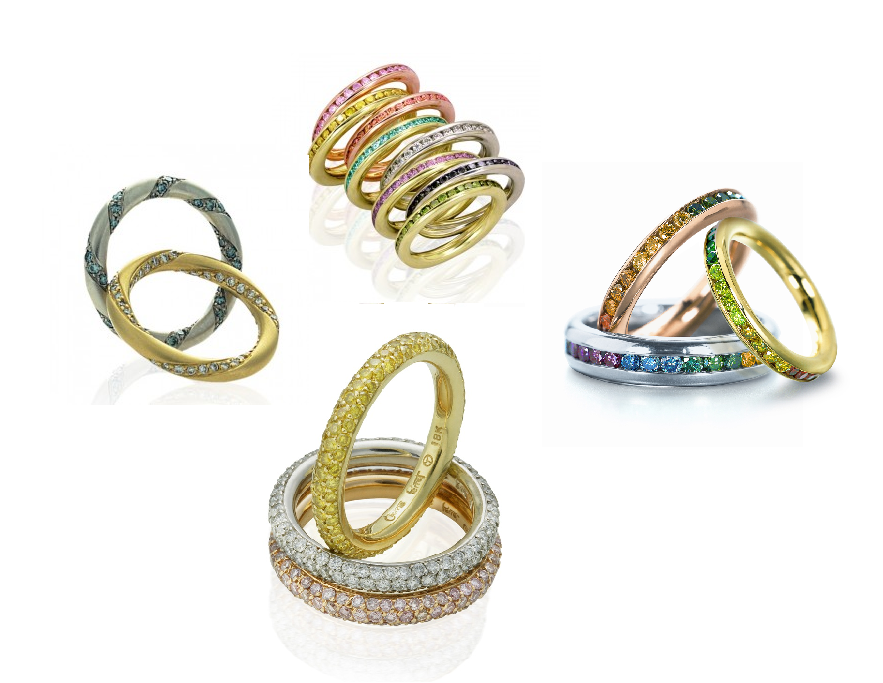
#WordlessWednesday - Spotlight On The Metal Edge of Etienne Perret


#WordlessWednesday is reserved for the few elite DesignLines that have that distinct look - when you see a piece you know immediately who designed it.  When Jewelry is this beautiful - words get in the way! 


Spotlight on Etienne Perret...
With over 40 years experience, Etienne Perret is one of the world’s premier designers of color diamond jewelry. He is best known for his colored diamond bridal designs in 18kt gold, platinum and now ultra-durable & stylish Ceramique gem ceramic.

http://etienneperret.com/


LinkWithin

Related Posts with Thumbnails

ShareThis